
“Code Name: V.X.A.”
“Code Name: V.X.A.”
Description
Mehriban Alakbarzadeh. “Code Name: VXA”
Age recommendation: 18+
Author: Mehriban Alakbarzadeh (State Prize laureate, Honoured Art Worker)
Production Director: Mehriban Alakbarzadeh (State Prize laureate, Honoured Art Worker)
Set Designer: Mustafa Mustafayev
Composer: Azer Hajiaskarli
Editing and Graphics: Benjamin Sayilov
Lighting Designer: Vadim Kuskov
Principal Cast: People’s Artist Yasin Garayev; Honoured Artists Kamala Muzaffar, Shovgi Huseynov, Leyli Valiyeva, Shafag Aliyeva, Nasiba Eldarova, Gamar Mammadova, Elnur Karimov, Ilham Asadov, Mehriban Abdullayeva, Gular Nabiyeva and Nofal Valiyev; actors Zemfira Abdulsamadova, Gunel Mammadova, Sabina Mammad zade, Aygun Fatullayeva, Asya Atakishiyeva, Khalida Alimammadova, Sevinc Aziz, Kerem Hadizada, Araz Pirimov, Jeyhun Mammadov, Anar Seyfullayev, Mirza Agha Mirzayev, Shabnam Huseynova, Konul Abil, Farida Gurbanova, Rashad Safarov, Elshan Shikhaliyev, Elshan Hajibaba yev, Nurlan Suleymanli and Vugar Mammadaliyev.
Genre: Historical documentary drama
Running time: One-act performance — 2 hours 20 minutes
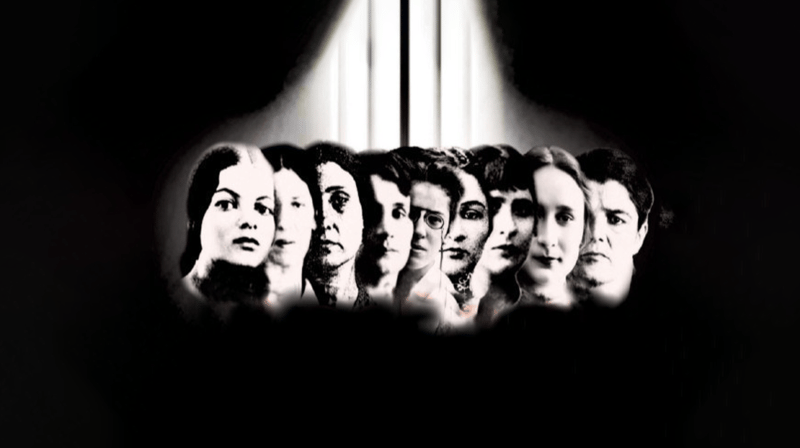
Mehriban Alakbarzadeh, a State Prize laureate and Honoured Art Worker, explores one of the darkest chapters in Azerbaijan’s history with Code Name: VXA, a production she both wrote and directed. The play is dedicated to Azerbaijani women who fell victim to the repressions of the 1930s.
Based on historical events and documentary evidence, the production commemorates the 130th anniversary of the birth of Ahmad Javad, a prominent figure in Azerbaijani literature, public life and education who became one of the victims of the repressions. It also tells the story of Shukriya Akhundzade, whose experience of persecution stands as an example of dignity and resilience. Through her story, the play commemorates the suffering of 26,000 women who endured brutal imprisonment and exile.
Drawing on historical documents and factual accounts, Mehriban Alakbarzadeh recreates the harrowing reality of the 1930s in Code Name: VXA.
Distinguished Azerbaijani figures were branded “enemies of the people”, and both they and their wives were arrested. In the Bayil detention centre, Stalinist officials subjected women to inhumane treatment and brutal torture. Following lengthy investigations, innocent women received prison sentences of eight, ten or fifteen years.
The women felt relieved that the investigations had finally ended. Having endured exhausting interrogations and torture, they began to look towards the future with hope. They believed that, once their sentences had been served, they would finally be reunited with their loved ones. They rejoiced in this hope, unaware of the hellish ordeal that still lay ahead.
Transported to Akmola in cold railway carriages, without food or water, the women faced another nightmare. There, they were forced to work in inhumane conditions and subjected to appalling cruelty. Some, unable to bear the suffering, took their own lives; others endured every hardship while preserving their honour and dignity.
Among them was a child, one of 1,502 children left without parental care. The child struggles to discover their identity and family history, seeking to understand their origins and establish that their birth was not the result of dishonour.
Although the play unfolds against a backdrop of profound tragedy, it carries a message of hope for the future: one day, the suffering will end, the women will return home, and they will be reunited with their loved ones. However unbearable the ordeal, time continues to pass, and eventually the women regain their freedom.
Through the voices of her characters, the playwright conveys the central message of the production:
“If any trace of us remains, if you remember us… then it means we existed… We lived… Without witnesses, without evidence, they took our lives and our honour. We were at the very bottom of life… and even below it. The most important thing is to remember us.”
This is, symbolically, our debt of farewell to 37 women. In reality, there were 26,000 of them… These women were the unseen heroines of history.
History is shaped not only by wars fought amid the roar of battle, but also by silent struggles. Women have been quiet, delicate and yet immensely powerful participants in history. Their lives demonstrate the possibility of achieving not only physical victory, but also moral and spiritual triumph.
As both author and director, State Prize laureate Mehriban Alakbarzadeh seeks to convey a vital message to a wide audience: we must never forget our history.
Those who forget their past have no future!
Rules
This event is available as QR tickets or as physical tickets sold at city box offices. QR tickets will be activated on the day of the event. To use your QR tickets, you need to log into your personal account in the iTicket.AZ mobile application.
More about QR tickets: QR ticket